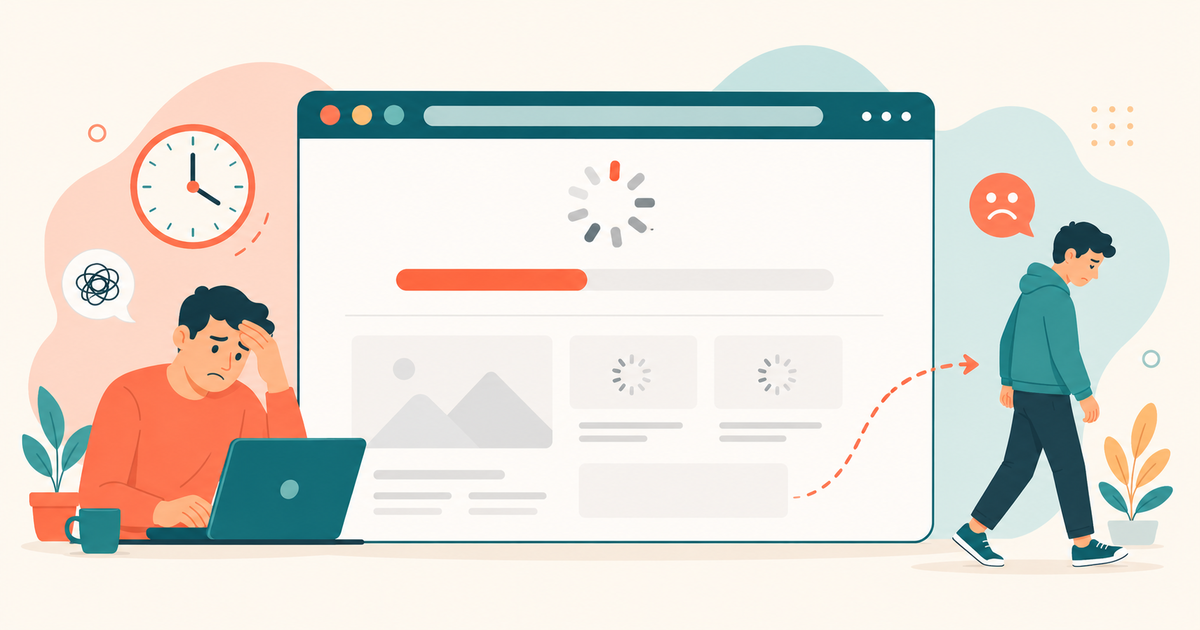
A customer lands on your website. They're interested in your service. Maybe they found you through Google, clicked on an advertisement, or received your website link from someone they trust.
Then the page starts loading.
They wait.
The images appear slowly. The buttons don't respond immediately. The page shifts while more content loads.
After a few seconds, they leave.
You may never know that customer visited your website. There is no message telling you that a sale was lost because the page was slow. But for businesses that depend on their website to generate enquiries, bookings, or sales, poor website performance can quietly affect results every day.
This is why website performance isn't just a technical issue. It directly affects how people experience your business online.
A website can look modern, have excellent content, and rank well in search results—but if it feels slow when someone tries to use it, you may be losing potential customers before they even see what you offer.
So, if your website feels slow, where should you actually start?
Start by Looking at the Experience, Not Just the Speed Score
The first mistake many businesses make is focusing entirely on a number from a website speed testing tool.
Performance scores are useful, but they don't tell the whole story.
What matters most is how your website feels to a real visitor.
Ask yourself:
Can they see useful content quickly?
Can they interact with the page without waiting?
Can they navigate between pages smoothly?
Can they complete an enquiry, booking, or purchase without frustration?
A website that scores well but feels slow to your actual customers still has a performance problem.
The goal shouldn't simply be to achieve a perfect score. The goal should be to create a fast, responsive website experience that helps visitors find information and complete actions without unnecessary waiting.
Your Website May Be Fast on Your Laptop but Slow for Your Customers
You open your website on your office computer, and everything seems fine.
But your customers may not be using the same device, internet connection, or browser.
Someone might visit your website from a mobile phone while travelling. Another visitor might have a slower connection. Someone else might be using an older device.
This is why mobile website performance matters so much.
A website that loads quickly on a powerful desktop computer can feel completely different on a mobile device.
If your business receives traffic from mobile users, test the website from their perspective—not just from your own computer.
Ask yourself:
Does the main content appear quickly?
Are buttons easy to use?
Does the page jump around while loading?
Can users scroll without delays?
Can they complete the main action easily?
Your customers don't care what technology is running behind the website. They care whether the website works smoothly when they need it.
Large Images Can Quietly Slow Down Your Website

Images are often one of the easiest performance problems to overlook.
A high-quality image may look excellent on your computer, but if the original file is unnecessarily large, your visitors may have to download much more data than they actually need.
This becomes especially noticeable on pages with multiple large images.
The solution isn't to remove all your visuals or make your website look boring.
Instead, images should be prepared for the way they're actually used.
Compressing large image files
Using modern image formats
Serving images in appropriate dimensions
Loading images only when they're needed
Avoiding unnecessarily large background images
A visually attractive website doesn't need to be a slow website.
The goal is to maintain the quality of your design while delivering the content efficiently.
Sometimes the Problem Is Everything Your Website Loads in the Background
A website may appear simple to a visitor, but behind the scenes it could be loading analytics tools, chat widgets, tracking scripts, advertising platforms, social media integrations, plugins, and other third-party services.
Each additional script can add work for the browser.
One script may not make a noticeable difference. But when dozens of unnecessary resources are loaded on every page, the combined impact can become significant.
This is particularly common on websites that have been developed and modified over several years.
A business adds one plugin.
Then another.
Then a marketing tool.
Then a chat widget.
Then another tracking script.
Eventually, nobody remembers which tools are still necessary.
Regularly reviewing third-party scripts and removing anything that no longer provides value can help reduce unnecessary loading.
Your Hosting Can Become a Problem as Your Business Grows
Sometimes the website itself isn't the only issue.
Your hosting environment also plays an important role in performance.
A small website with limited traffic may perform perfectly well on basic hosting. But as traffic increases, the same setup may struggle to deliver pages quickly.
This is especially important for businesses operating:
eCommerce websites
Booking platforms
Customer portals
SaaS applications
High-traffic websites
Websites with complex databases
If your website becomes slower during busy periods, the hosting environment and server configuration may need to be reviewed.
Moving to a more powerful hosting solution isn't always the first answer. The right approach is to understand where the bottleneck actually exists before spending money on infrastructure.
A Website Doesn't Need to Load Everything at Once
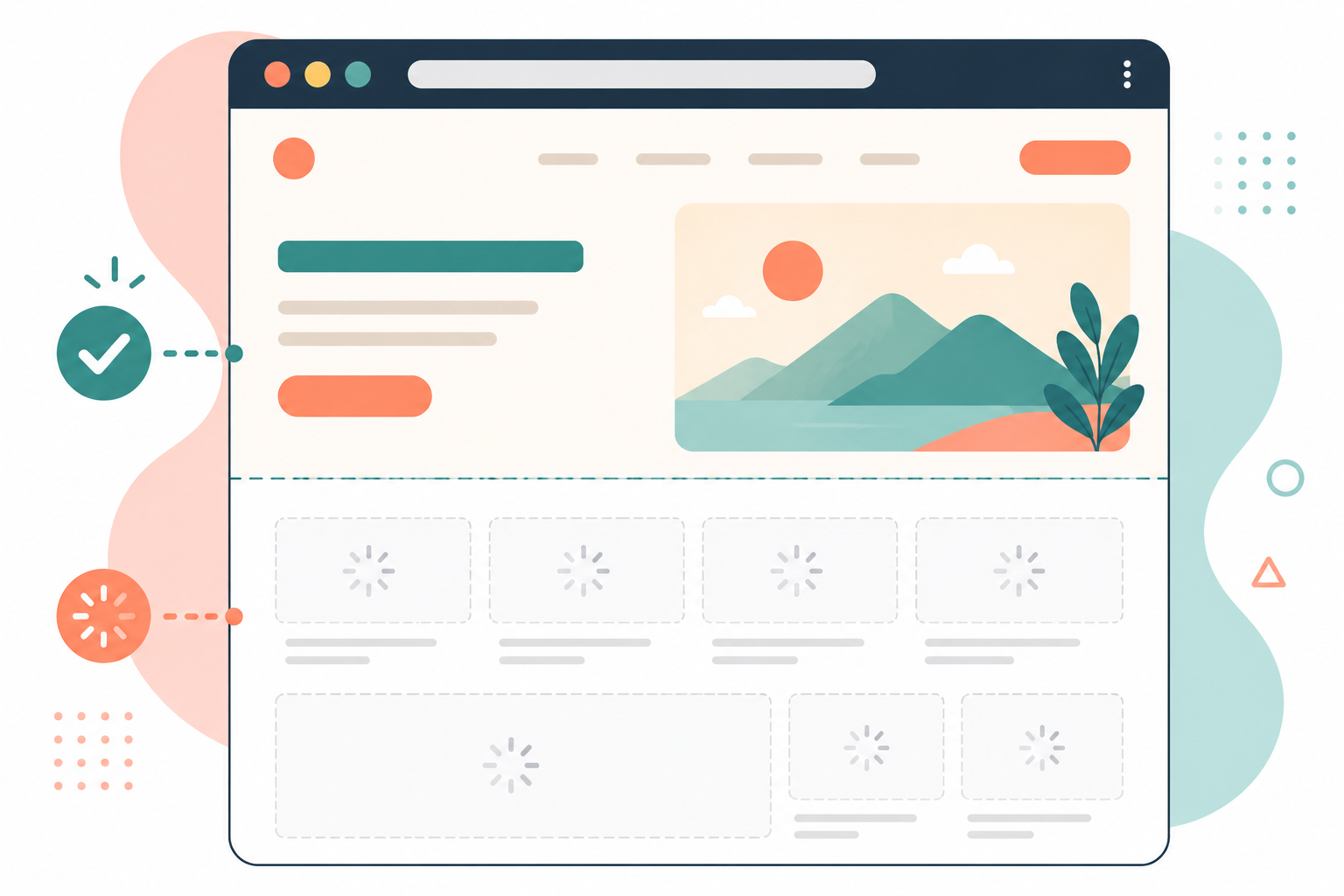
Imagine opening a webpage and asking the visitor to wait while the browser loads everything on the page—even content they haven't reached yet.
That's not always necessary.
A better approach is to prioritize the content visitors need first and delay less important resources until they're required.
For example, content visible at the top of the page should generally be prioritized over images far below the fold.
This is where techniques such as lazy loading, resource prioritization, and efficient asset delivery can improve the experience.
Give visitors what they need first, instead of making them wait for everything at once.
This can make a website feel much faster even when the total amount of content on the page hasn't changed.
More Features Don't Always Mean a Better Website
Businesses often want their websites to do more.
They add animations.
Pop-ups.
Chat widgets.
Interactive elements.
Recommendation tools.
Complex filters.
Multiple integrations.
All of these features can be useful when implemented for the right reason.
The problem starts when features are added without considering their impact on performance.
For example, an animation that looks impressive may slow down a page on mobile devices. A complex filtering system may create unnecessary database queries. A third-party widget may delay the loading of important content.
The question shouldn't be:
"Can we add this feature?"
It should be:
"Does this feature provide enough value to justify its impact on the user experience?"
Sometimes the best performance improvement is removing something that doesn't provide enough value.
Don't Wait Until Your Website Becomes Slow to Think About Performance
One of the biggest mistakes businesses make is treating performance as something to fix at the end of development.
By that point, performance problems may be built into the architecture.
The database structure may need to change. The way content is loaded may need to be redesigned. Third-party integrations may need to be replaced. Some features may need to be rebuilt.
This can be much more expensive than considering performance from the beginning.
When building a custom website, performance should be part of the planning process.
The development team should think about:
How much traffic the website may receive
How users will interact with the system
What data needs to be processed
Which integrations are required
How the website will perform as the business grows
Planning these things early can prevent expensive performance problems later.
A Slow Website Can Waste Your Marketing Investment
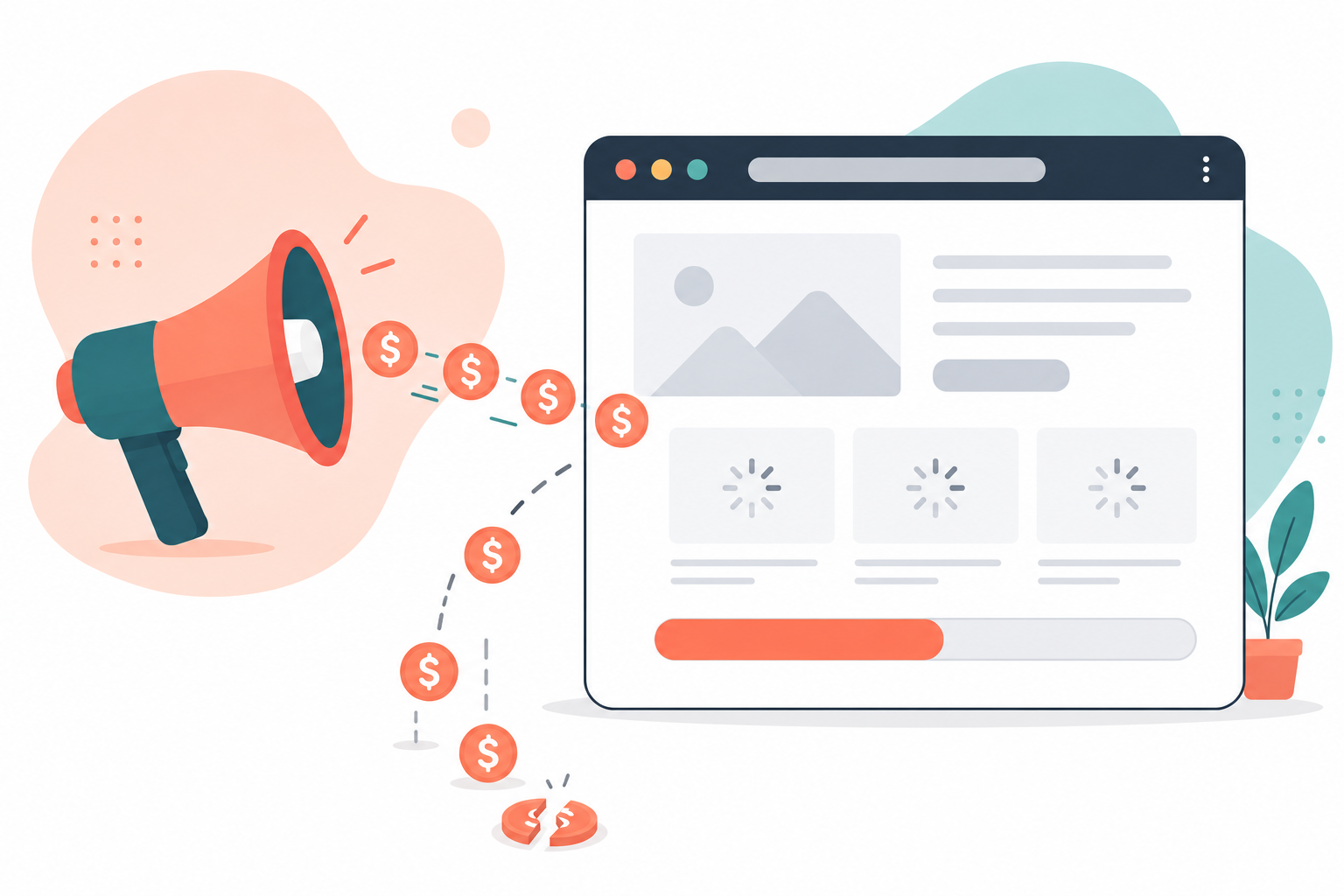
Imagine spending money on Google Ads or social media advertising to bring visitors to your website.
People click your advertisement. They arrive at your landing page. But the page takes too long to load.
Some visitors leave before they even see your offer.
You're still paying to attract traffic, but part of that traffic never gets the opportunity to become a customer.
The same applies to organic search traffic.
You may invest time and money in SEO to attract visitors, but if the website experience is frustrating, traffic alone won't guarantee results.
This is why website speed and conversion performance are closely connected.
A fast website doesn't automatically guarantee more sales, but a slow and frustrating experience can create unnecessary barriers between visitors and the actions you want them to take.
Before Rebuilding Your Website, Find the Real Problem
When a website becomes slow, some businesses immediately assume they need a complete redesign.
That's not always true.
Sometimes the biggest problems can be fixed without rebuilding the entire website.
The first step should be understanding what's actually causing the slowdown.
It could be:
Oversized images
Unnecessary plugins
Poorly optimized code
Slow database queries
Too many third-party scripts
Hosting limitations
Inefficient APIs
Poor caching
An outdated technical architecture
Once the real problem is identified, you can decide what needs to change.
Sometimes a few targeted improvements can make a significant difference.
In other cases, the existing architecture may be limiting the website so severely that a rebuild makes more sense.
The important thing is to diagnose first and rebuild only when necessary.
The Real Goal Is a Website That Feels Fast to Your Customers
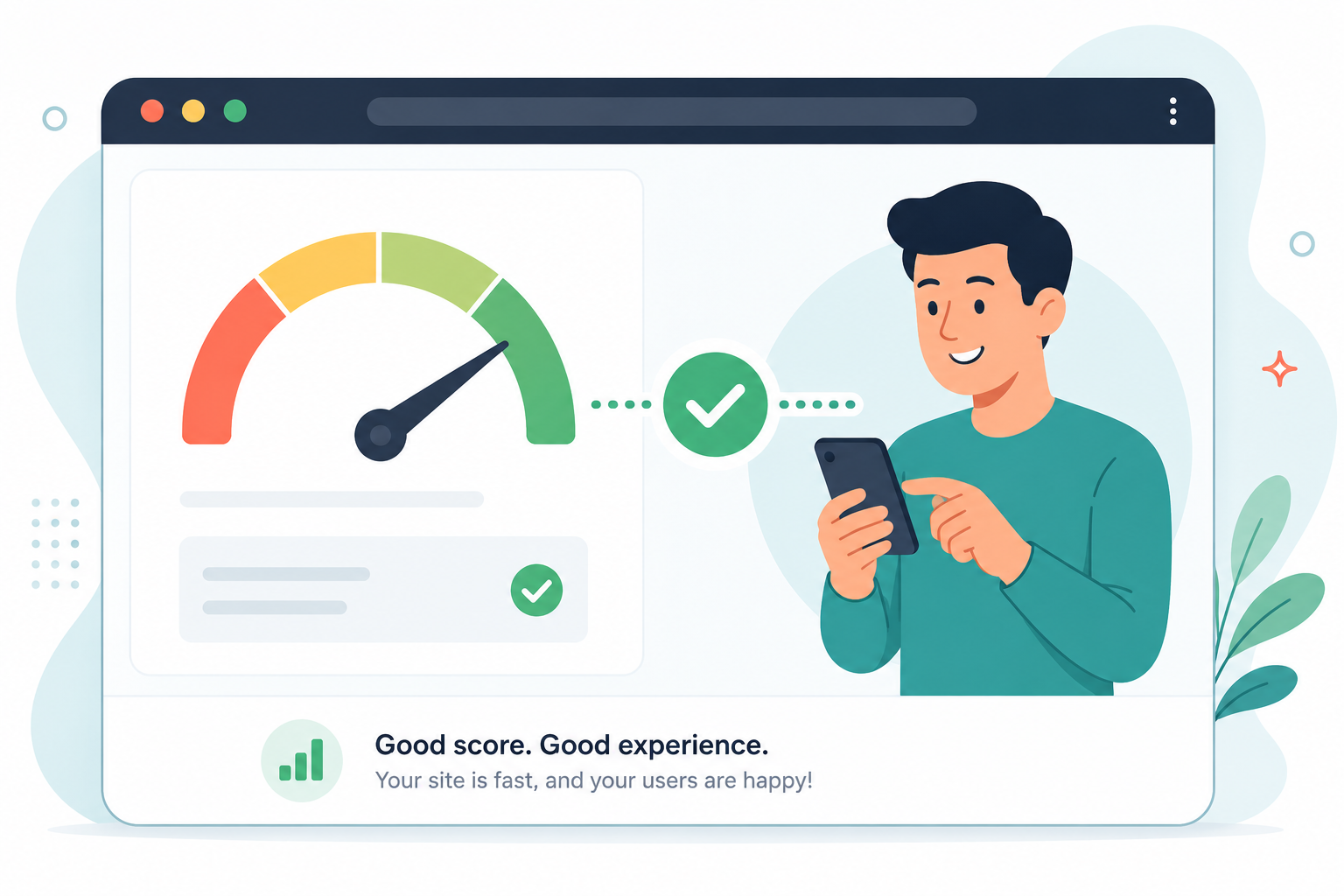
Website performance isn't about chasing a perfect score or adding technical optimizations just for the sake of it.
It's about creating a better experience.
A customer should be able to visit your website, understand what you offer, find the information they need, and complete an action without unnecessary delays.
Whether that action is:
Sending an enquiry
Booking an appointment
Reserving a service
Buying a product
Creating an account
Requesting a quote
Every second of unnecessary friction creates another opportunity for that visitor to leave.
If your website feels slow, don't immediately assume you need to rebuild everything. Start by understanding where the experience breaks down.
Look at how your website performs on mobile devices. Review your images and third-party scripts. Check your hosting environment. Identify unnecessary features. Analyze where users experience delays.
And if you're planning a new custom website, think about performance before development begins—not after customers start complaining.
A fast website isn't simply a technical achievement. It's part of the customer experience your business provides online.
And when your website is one of the first places customers interact with your business, that experience matters.
Is Your Website Slowing Down Your Business?
If you're unsure what's causing your website performance issues, our team can review your website, identify potential performance bottlenecks, and recommend practical improvements based on your business needs.
 +91 951-369-3780