
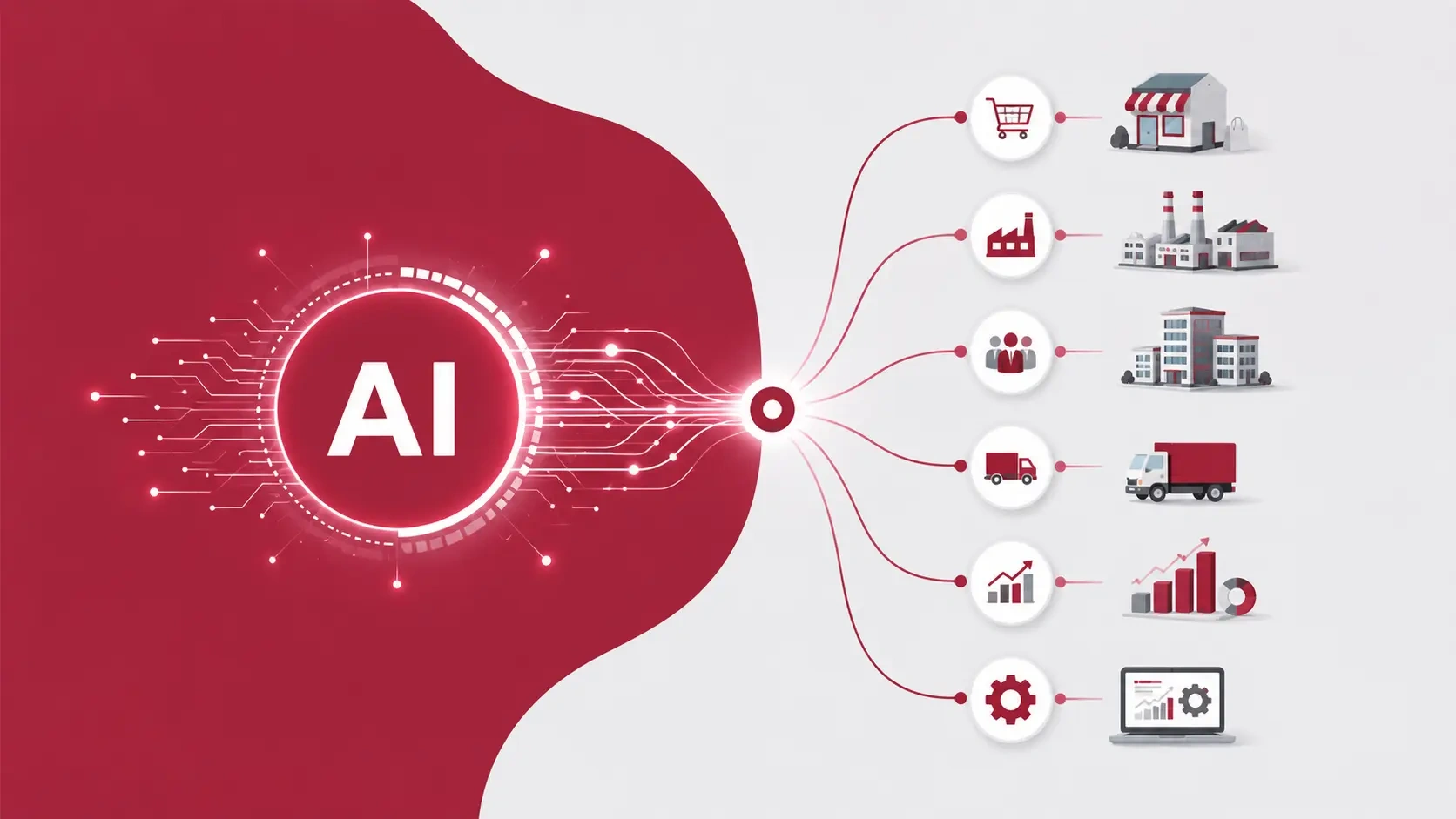
Start by Identifying Where AI Can Make a Real Difference
Artificial Intelligence (AI) is no longer just for large enterprises or technology companies. Today, businesses of every size are using AI to automate repetitive tasks, improve customer experiences, and make faster, data-driven decisions.
The biggest question most business owners ask isn't "What is AI?" — it's "How can I actually use AI in my business?"
The answer depends on your business goals. AI should solve a real business problem, not be implemented simply because it's trending. Before investing in any AI solution, identify the areas where your team spends the most time, where customers face delays, or where manual work slows down growth.
Let's look at some practical ways businesses are using AI today.
1. Automate Repetitive Daily Tasks
Every business has repetitive work that takes valuable time away from employees.
Whether it's entering customer information, processing invoices, updating spreadsheets, organizing documents, or sending routine emails, these tasks can quickly consume hours every week.
AI can automate many of these activities, allowing your team to focus on work that requires creativity, decision-making, and customer interaction.
2. Improve Customer Support Without Replacing Your Team

Customers expect quick responses regardless of the time of day.
Instead of relying entirely on manual support, businesses can use AI-powered chatbots or virtual assistants to:
- Answer common questions
- Guide website visitors
- Collect customer information
- Schedule appointments
- Provide instant assistance
When a customer needs personalized support, the conversation can be transferred to a team member without losing any information.
This improves response times while allowing your support team to focus on more complex customer requests.
3. Make Better Business Decisions With AI
Most businesses already collect valuable information through sales, customer enquiries, website traffic, and operational reports.
The challenge isn't collecting data — it's understanding what that data is telling you.
AI can identify trends, predict customer behaviour, highlight opportunities, and generate reports that help business owners make more informed decisions instead of relying on assumptions.
Better insights often lead to better business decisions.
4. Personalize the Customer Experience
Today's customers expect businesses to understand their preferences.
AI can recommend products, personalize website content, suggest relevant services, and deliver targeted marketing messages based on previous interactions.
Instead of showing every visitor the same experience, businesses can create more relevant journeys that improve engagement and increase conversions.
5. Simplify Appointment and Booking Management
Businesses that rely on appointments or reservations often spend a significant amount of time managing schedules manually.
AI can recommend available time slots, reduce double bookings, send automated reminders, manage cancellations, and even suggest alternative appointment times when schedules change.
This creates a smoother experience for both customers and staff while reducing missed appointments.
6. Speed Up Internal Business Processes
Employees often spend more time searching for information than actually using it.
AI can organize business documents, summarize lengthy reports, retrieve important files, generate meeting notes, and search internal knowledge bases within seconds.
Instead of switching between multiple systems, employees can access the information they need much faster.
7. Strengthen Sales and Lead Management
Every enquiry isn't equally valuable.
AI helps businesses organize incoming leads, identify high-intent prospects, automate follow-ups, and remind sales teams when it's time to reconnect with potential customers.
Instead of manually tracking every lead, businesses can focus their efforts on opportunities that are more likely to convert.
8. Solve Real Business Problems With AI
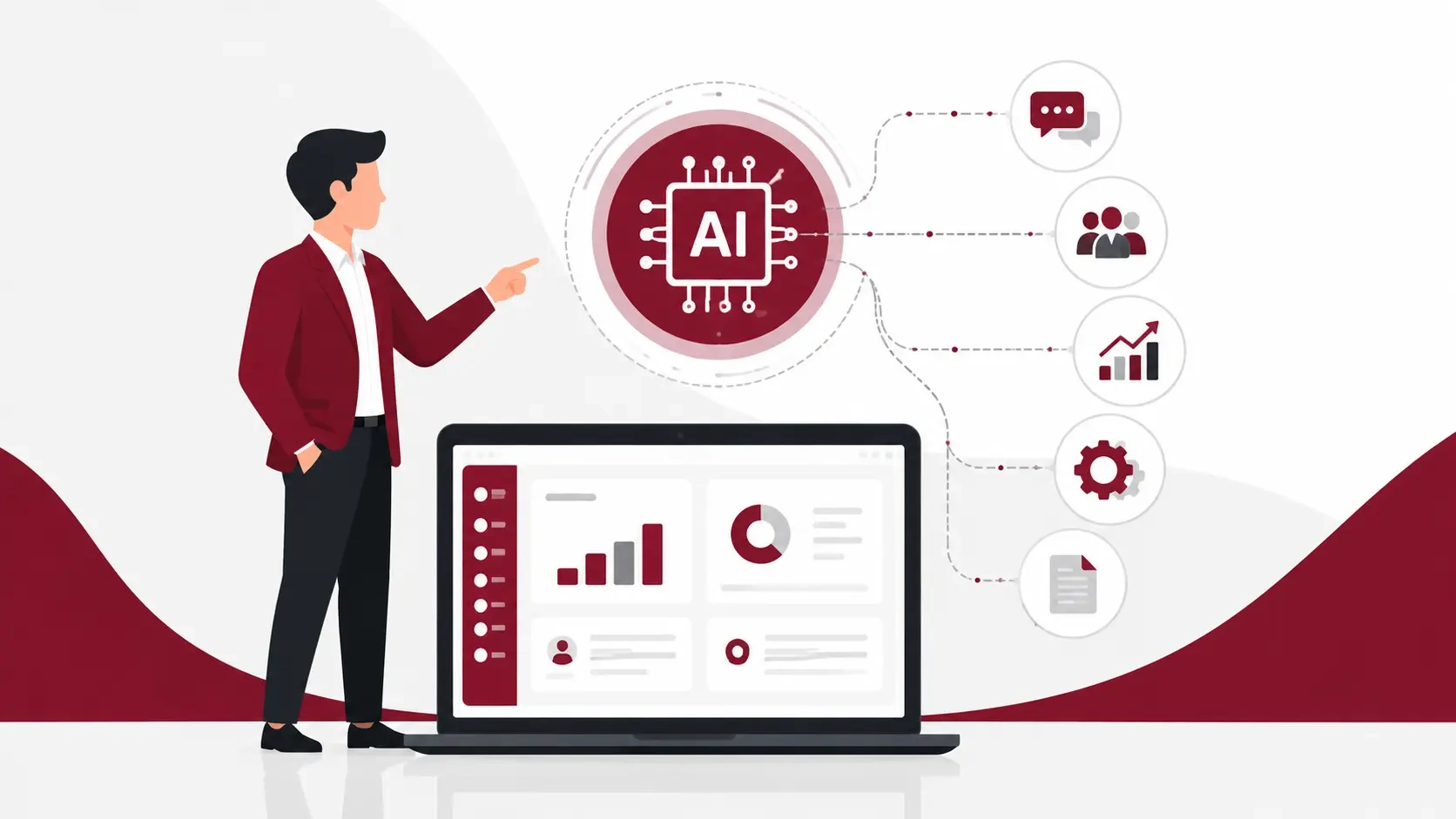
One of the biggest misconceptions about AI is that it's only useful for technology companies.
In reality, almost every industry has repetitive tasks and operational challenges that AI can improve.
Hotels & Hospitality
Hotel staff often spend hours answering questions about room availability, pricing, check-in times, and booking changes.
An AI booking assistant can answer these common questions instantly, recommend available rooms, manage reservations, and send booking confirmations automatically. This reduces the workload on reception teams while improving the guest experience.
Medical Clinics & Healthcare
Receptionists handle appointment scheduling, patient enquiries, cancellations, and reminders throughout the day.
AI can automate appointment bookings, send reminders, answer frequently asked questions, and help patients find available doctors without waiting on the phone. This allows healthcare staff to spend more time focusing on patient care instead of administrative tasks.
Manufacturing & Staffing Companies
Managing employee schedules manually becomes increasingly difficult as businesses grow.
Creating shift schedules, handling last-minute absences, approving shift swaps, and managing overtime often require significant administrative effort.
AI can automatically create employee shift schedules, recommend replacements based on availability and skills, notify employees about schedule changes, and help managers optimize workforce planning.
This saves time while ensuring the right people are available when they're needed.
E-commerce Businesses
Online stores receive hundreds of questions every week about products, shipping, returns, and order status.
An AI customer assistant can instantly answer common questions, recommend products based on customer interests, provide delivery updates, and guide shoppers through the buying process.
Customers receive faster support, while your team spends less time answering repetitive enquiries.
Professional Service Businesses
Consulting firms, law offices, accounting companies, and marketing agencies handle large volumes of documents, emails, proposals, and client meetings.
AI can organize documents, summarize contracts, prepare meeting notes, draft routine emails, schedule consultations, and retrieve important business information within seconds.
Instead of replacing professionals, AI reduces administrative work so they can spend more time delivering value to clients.
9. Start With One Business Problem

Many businesses delay adopting AI because they think they need to transform their entire operation at once.
In reality, the most successful AI projects usually begin with one clearly defined problem.
That could be:
Start small. Solve one real problem. Measure the result.
Solving one problem first allows your team to see measurable results before expanding AI into other areas of the business.
How to Know If Your Business Is Ready for AI
Your business may benefit from AI if you regularly experience challenges such as:
If several of these challenges sound familiar, AI could help improve efficiency without completely changing the way your business operates.
Final Thoughts
Artificial Intelligence isn't about replacing people, it's about helping people work more efficiently.
The businesses seeing the best results aren't using AI everywhere. They're using it where it creates the greatest impact, whether that's automating repetitive work, improving customer service, managing bookings, optimizing employee schedules, or helping teams make better decisions.
Before investing in AI, start by identifying the biggest challenge in your business. Solving one real problem often delivers far greater value than implementing multiple AI tools without a clear purpose.
When implemented strategically, AI becomes more than just another technology, it becomes a practical business solution that saves time, improves customer experiences, and supports long-term growth.